Recently, OpenAI CEO Sam Otman discussed the global DRAM supply shortage issue on the Cheeky Pint podcast.

From a global resource allocation perspective, Otman noted that a large amount of DRAM is configured in personal computers (PCs) without being fully utilized, representing an inefficient resource allocation method.
According to Otman, the global limited DRAM resources are dispersed in PCs, and these memories are only in use approximately 5% of the time. He believes that in the face of highly constrained global memory supply, it would be more beneficial to concentrate the DRAM in cloud-based data centers to achieve higher resource utilization rates.
Furthermore, Otman mentioned that many people wish to directly run open-source AI models on their own computers and believe that as local AI capabilities improve, data centers may require less computational resources. However, Otman holds a different view, emphasizing that maximizing cloud-based resource utilization is more crucial in the current supply-constrained environment.
This discussion coincides with the PC market under pressure. According to IDC, the global PC shipment volume in the third quarter of 2026 was 62.7 million units, down 9.1% from the previous quarter and a significant 20.1% decrease from the same period last year.
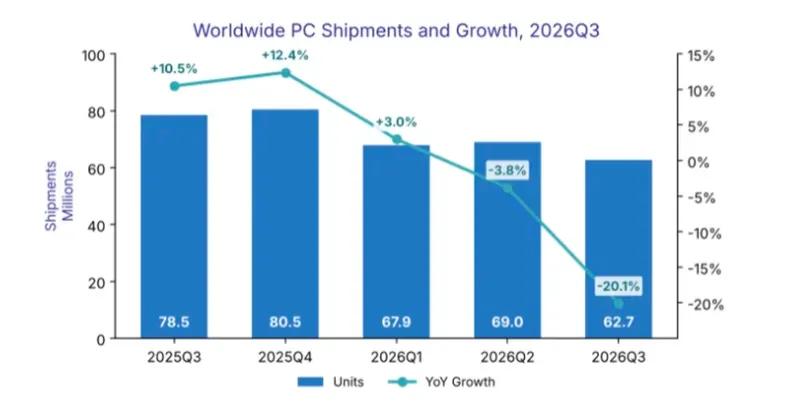
Typically, the global PC sales volume in the third quarter benefits from the seasonal demand of the back-to-school season, making this large decline unusual.
IDC attributes the significant decline in PC shipments to "supply issues" and "high prices." In other words, with the ongoing memory shortage and price hikes, the industry's so-called "RAMaggedon" crisis continues to intensify.
Counterpoint Research's latest report indicates that all major PC manufacturers, including Apple, Dell, HP, and Lenovo, experienced double-digit declines in shipments in the third quarter of this year. HP saw the largest decline, with a 31% drop, followed by Dell (-25%) and Lenovo (-23%), while Apple's shipments decreased by 11%.
Counterpoint senior analyst Minsoo Kang pointed out that as memory and component costs rise, pushing up system prices, consumers are forced to delay replacing their devices, putting increasing pressure on the global PC market.